Monday, June 1, 2009

One Year

By Alisha

Micah and I are just a few days away from completing our first year in Peru. When we first arrived in Lima last year we didn't know what to expect. I only knew a few words in Spanish and Micah had little experience working with youth, but I think I can speak for both of us when I say that I think our transition into life and work here in Peru has been pretty seamless. This is not to say that we haven't felt frustrated, questioned what we are doing, or wondered if our work is really benefiting anyone. In fact, those are things that I think about on an almost daily basis. Our feelings of contentment in our work and life here are really a testament to the people that we have met during the last year. We have been fortunate to have really understanding and accommodating host-families both during training and now in our site. We have made lasting friendships with people in our community and with other Peace Corps volunteers. These relationships have been really important in feeling at home here in Peru.

However, while I was thinking about how to summarize my impressions of our first year in Peru, I realized that no matter how comfortable I feel in my community, with the language, or with Peruvian culture in general there are always things that continue to surprise me.

When Micah and I first arrived in our community I knew that we would get a lot stares, and that was understandable. People were curious about the really tall, really white people hanging around. I really didn't mind whistles, staring (I mean stop-everything-you-are-doing, no-shame, 1-foot-from-my-face staring), or whispered comments. In fact, I expected this response and might have actually been disappointed if no one seemed to take an interest in us. I also expected that this interest would generally wear off over time...I was wrong. After being in our community for 9 months, the stares and comments continue. At times, it feels as if interest in us has intensified. The allure of being the topic of conversation has diminished and being called “gringo” twenty times while walking across town can be really annoying.

We have also encountered misconceptions and interesting questions about both ourselves and the United States.
  • Cuy (guinea pig) is a popular food here and many people find it interesting that in the States guinea pigs are pets. While having a discussion with a student in one of our youth groups about this difference, she told us that her high school teacher had told her that instead of eating guinea pigs in the States we eat rats. Micah and I looked at eat other and confidently responded that her teacher was mistaken. We don’t eat rats.
  • Another person we met was under the impression that we only eat canned food.
  • We like to have kids try and guess our ages when they ask us how old we are. Micah tends to get outrageous guesses, like one kid who thought he was 56 years old.
  • My host mom was convinced that there must not be potatoes in the US based on my lackluster performance in potato peeling. I tried to explain the concept of a vegetable peeler as opposed to using an unwieldy dull knife, but it was a lost cause.
  • Mothers are also very interested in what Micah and I may have eaten to have caused us to be as tall as we are. We tried to explain the combination of vitamins and genetics, but have most mothers seem to be content only when they hear that we eat a lot less rice than Peruvians and a lot more vegetables.
We are sure that the next 15 months will be just as interesting as the first 12 have been!

Tuesday, May 5, 2009

A Narwhal Riding a Segway & Cinco de Micah

Our class of kindergarteners who after a 6 week self-esteem workshop are all happier, healther, and have a self-esteem level off the charts. Or so we hope...


By Alisha

Today is Micah's birthday and as you can see in the picture below he looks very much like a narwhal riding a segway. Happy Birthday Micah!


On another note Micah and I were reminded again of our "celebrity" status in our community. We frequently get a lot of stares and questions, but we have now been living here for over 8 months and people continue to surprise us with their interest in us when we are out and about. My favorite example of this occurred yesterday. Micah and I were walking out of town to a neighboring community where we have a youth group. As we were walking we were met with a funeral procession. It is customary to have a procession on foot with a band, which leads everyone to the cemetery. Micah and I stopped walking to let the procession pass and to show respect. A woman and her granddaughter who were in the procession stopped, looked at us, and asked if they could take our picture. So we said yes...then they continued on with the funeral procession.

Rambo helped us move with our host family into a new house last week. Thanks Rambo!

Homemade scrabble (made with bottle caps) = best idea ever

Monday, April 20, 2009

So Close

By Alisha

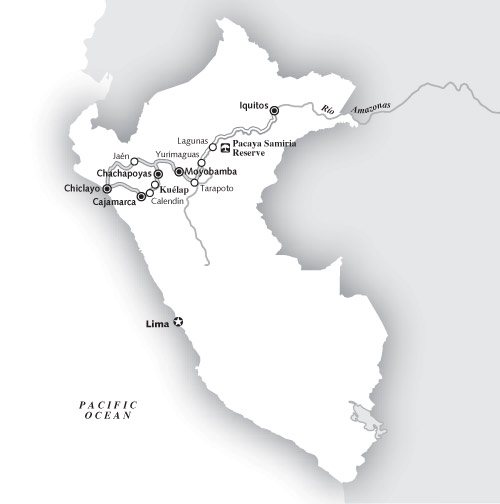
Semana Santa (which is consists of Holy Thursday to Easter Sunday) is a big holiday in Peru and a lot of people take the opportunity to travel during these days. A lot of Peruvians head to the beach to have an end-of-the-summer blowout while others stay home and have more of a traditional Easter celebration. Micah and I and three friends of ours from our training group decided to go to Chachapoyas, which is the department capital of Amazonas (the department to the east of were we live in Cajamarca). Near Chachapoyas are various pre-Incan ruins including Kuelap, which is sometimes, called the Machu Picchu of Northern Peru. There are also beautiful hikes and one of the tallest waterfalls in the world. That being said we were really excited to experience this relatively unknown (outside of Peru) tourist attraction.


On a map it appears as through one could almost walk to Chachapoyas from were we live in Cajamarca, but we were told that the best route is actually from Chiclayo on the coast. From Chiclayo there is a paved road the entire way as well as routine and secure bus service. What else could we ask for? After meeting up with our friends in Chiclayo (we have been on a bus 17 hours at this point) we headed out to finish the last 10 or so hours to Chachapoyas. Everything was going smoothly until at about 3:30am the bus stopped and we were told that the bus was not able to pass on the road ahead, but as soon as we could pass we would. After pondering the information that we will pass when we can pass and wondering what that meant we drifted back to sleep. At 6:00am the bus hadn't moved and it was getting light enough to go outside and check out the situation. We were surprised to see around 40 other buses with weary travelers wondering around. After considering our options: hiking to Chachapoyas, walking back to the last town to see about another bus back on the coast, or sitting on our bus indefinitely, we decided to start walking back in the opposite direction to try to get back to the coast and salvage our vacation. When we reached the end of the buses the last bus had decided to turn around and head back to Chiclayo and then Trujillo. We hopped on and decided to go to Huanchaco the beach near Trujuillo that we had visited last November.


After a 12-hour bus ride we arrived in Trujillo and happily got off of the bus since we had spent the last 25 hours straight on buses (at this point Micah and I have been on buses for 37 hours).


We ended up having a nice and very relaxing vacation which included a Peruvian Eric Clapton cover band which is something that everyone should experience at least once in their lives. The band covered such classics as Tears in Heaven, Layla, and Spoonful. The only problem was that no one in the band could speak English. Nonetheless it was magical.

Sunday, April 5, 2009

Working hard for the money

By Alisha & Micah

This is our friend Claudio, an Afghan hound
who prances around Chota. He is by far the best
looking dog in town.

It has been a while since our last post and we are finding ourselves content and busy with work. To give you an idea of what a Youth Development Volunteer in Chota does, here are some of the projects that we are currently working on:

Health Facilatators with the University of Cajamarca-Chota
For the past two months we have been meeting with a group of nursing students in order to train them in a variety of health-related topics so that they can develop a series of presentations aimed at educating high school students, whose current health education is lacking.

Youth Groups with a local NGO
One of our community partners runs a program aimed at combating child labor. We are collaborating with him on four different youth groups in three communities for kids involved
in child labor. We have been doing a variety of activities related to healthy lifestyle
development and vocational planning.

Self-Esteem Workshop with Kindergarten class
We live down the street from a kindergarten and we thought it would be fun to do some
self-esteem activities with the 5 year-old class. So far, so good.

English Club
When we arrived in Chota, our host family expressed interest in us teaching their two children English, and we thought that it was a great idea to work with them on some English skills. Well, word of our English Club is spreading like wild fire and has become the bane of our existence. Literally every single time we meet (twice a week) new parents show up begging us to make their kids fluent in English. It is really hard to turn people down on the spot and we feel like there is an expectation that there is the expectation that we will continue to teach English for the remainder of our service. The problem is 1) we are not English teachers and 2) there is a big gap between the parents' desire for their children to learn English and the children's motivation to do so. We really don't have a problem teaching some English, but we are going to have to make some changes in order to have some control over the number of participants. Hopefully, English Club will be a very short term project.

Environment Club
At the end of last school year, we were approached by a highly motivated student from one of the high schools in town. She was very interested in collaborating with us on some environmental projects, especially instituting recycling at her school. We are now working with her and a group of high school seniors to plan some Earth Day activities (Earth Day is completely new to Chota) and try to impliment environmental education and a recycling program at their high school. This is a really fun project because everything has been the ideas of the students who are really positive and motivated.

Baby English Club (thanks to Micah)
The mother of one of the students in our environment club runs a "bilingual" daycare. Problem being that neither she nor any of the staff speaks English. At all. So, she asked us to help them out by coming and exposing the babies and toddlers that attend her daycare to English. Since Micah happily agreed, we are now spending an hour a week speaking English to children who hardly speak Spanish due to the fact that they are 10 months old.

PTA Meetings with Early Intervention Program
We are bringing the fun back to monthly parent meetings at an early intervention program for children with disabilities. We are not sure how much fun is really being had, but hopefully the parents are learning new approaches to incoorporate their children into daily activities and into the community.

The Children's Shelter
Work continues with the children at the Albergue. We have done lots of self-esteem activities, sports, nutrition, arts and crafts and...English! This is still one of our favorite places to work.

Addionally, we are planning to start a few more things within the next month, including a Friday night movie club to give young people a positive social activity and a program for university students studying to be English teachers.

For the Easter holiday we get a few free vacation days and are planning to go to Chachapoyas. Stay tuned for pictures...

Thursday, March 12, 2009

Carnaval in Cajamarca

By Alisha


Micah and I couldn't miss the celebrations of carnaval in Cajamarca, which is known as the capital of Peruvian Carnaval. Celebrations can start as early as the month of January, but the main events take place the last week before the start of Lent. The celebrations are non-stop and include numerous parades, dancing in the Plaza de Armas, and throwing water balloons and paint at other people among many other traditional activities. Clearly we found the paint throwing quite intriguing...

Thursday, February 19, 2009

El Túnel

By Alisha
With our summer programs coming to an end, we decided to go on a hike with the group of girls that participated in our sports and healthy lifestyle workshop. The girls decided on a place called El Túnel, which is near a town called Campamento. We enjoyed about a two-hour hike on a beautiful sunny day. Everyone brought their lunch and we ate by a river before walking another 30 minutes to check out El Túnel and a nearby trout farm. The lunch the girls brought consisted of rice, noodles, and boiled potatoes mixed together. Nothing like some serious carbo-loading after a good walk...

A part of El Túnel, which was created in order to re-route a water shed that originally went toward the jungle and now can provide water to the coast.

Trout Farm

Friday, February 6, 2009

Three Things: Travel, loss, and uncertainty

By Alisha

Adventures in travel: Micah and I traveled to our department capital to attend a couple of regional meetings and to see other volunteers that we hadn’t seen since before Christmas. There are three primary ways for us to travel from Chota to our department capital, Cajamarca. There are buses that run during the day, which stop constantly to pick up and drop off people and that stop for a half and hour lunch break. This makes our trip between 7 to 8 hours. There is also a bus that runs at night which makes fewer stops, but arrives at our destination around 4:00 in the morning, which leaves us tired, cold, and a little lost as to what to do at this time in the morning. The final option is to take a pick-up truck to a town about 2 hours from Chota and then transfer to a combi that takes us to Cajamarca. This option cuts our trip down to around 5 hours because the truck and combi have better mobility on the mountain roads and don’t stop very often to pick up passengers. These trucks and combis also run frequently throughout the day making them very convenient. So Micah and I felt like the truck/combi combination was the way to go until our combi smashed into the side of a mountain during our last trip. We were about 30 minutes outside of our destination when a truck coming from the other direction swerved into our lane. Our driver (who was driving far too fast in the rain) swerved to avoid hitting the truck head on and smashed into the side of a mountain. The impact shattered all of the windows on the right side and left us wedged against the rocks at the 45-degree angle. Surprisingly no one was hurt. After the accident our driver hopped out of the combi and we never saw him again. Perhaps he went in pursuit of the driver of the truck. All of the passengers had to climb out the windows on the left side of the car and we then hitched a ride into the city. To say the least, traveling, especially during the rainy season, isn’t so appealing right now.

On the return trip Micah and I returned at different times. During the last leg of Micah’s trip the truck he was riding in ran out of gas. This meant that everyone in the truck had to help push the truck up the hills and then get back in the truck in order to coast down. Since I wasn’t there, this is really funny to me, but not so funny for Micah.

Experiencing loss: I returned to Chota before Micah (because he was feeling really sick) in order to facilitate our summer music program that we have been doing weekly with students who attend a school for youth with special needs. We have four young men in the group who we have really enjoyed working with and getting to know. When only three of the youth showed I asked about Henry, the other member. The members then proceeded to tell me that he had accidentally drowned in a nearby river on January 30th. After I made sure that I understood them correctly and confirmed the news with a teacher from the school, I wasn’t sure what to do or to say to the members of the group. It felt wrong to continue on with the planned project for the day, so I asked the guys how they were feeling. I guess I was expecting to see some emotion or share some stories about Henry, but I didn’t get much response. We continued with our project and no one seemed to know if a wake or burial had been planned.

An anecdote about Henry: After several groups, Henry couldn’t remember our names. We would ask him if he knew our names and he would always say yes. When we pushed him a little to see if he really did remember our names he called Micah "Profesor Gringo Grandote" (Prof. huge white guy) and he called me "Profesora Señorita" (Prof. young lady). Everyone had a good laugh and he continued to call us by our new names.

Drum making with our music group


Uncertainty: It is becoming more and more likely that the children’s orphanage that we have been working with since arriving in site will be closed down soon. The story behind this is long and complicated, but in part boils down to a lack of funding. I don’t want to get into the complex relationship between the municipal government, caregivers, and the Catholic Church that I would have to in order to explain this situation. Hopefully the closure does not take place and will not erase, in my opinion, an essential community resource.

While the experiences I just shared are all pretty negative, I am feeling really positive about our future in Chota. I have realized that this is an evolving experience and that the ups and downs will continue until we complete our service in August 2010. While I am looking forward to the future, I am also trying to remind myself to focus on the present and to take advantage of this amazing experience.